

Designer’s Day: Building Your Own AI Visual Stock to Design with Human Intention
A reflection from practice on artificial intelligence, human-centered design, and what it means to create images with real identity in a moment where even legal boundaries are starting to blur.
ARTIFICIAL INTELLIGENCEDESIGN
4/28/20269 min read
Yesterday, April 27th, was World Design Day.
And more than celebrating it, I want to use it as an excuse to share something I’ve been exploring over the past few months.
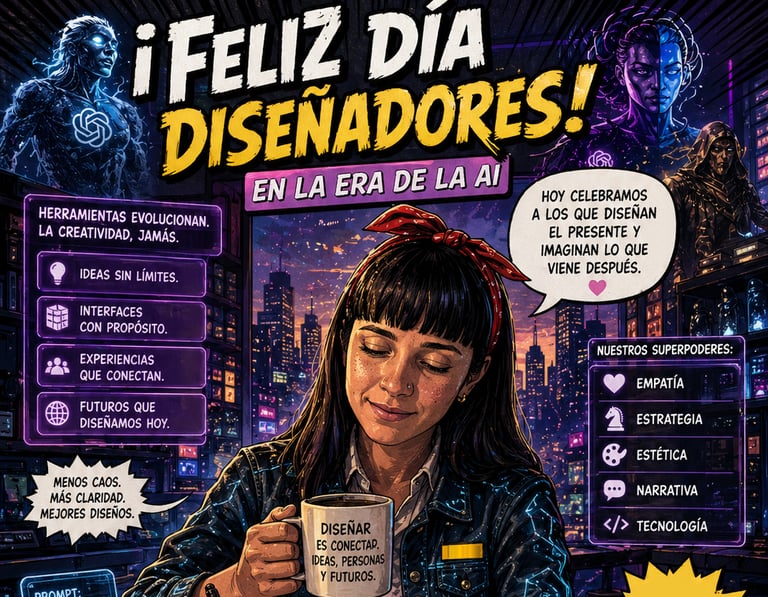
How to use artificial intelligence not to produce more… but to design better.
1. The problem: soulless images in the age of AI
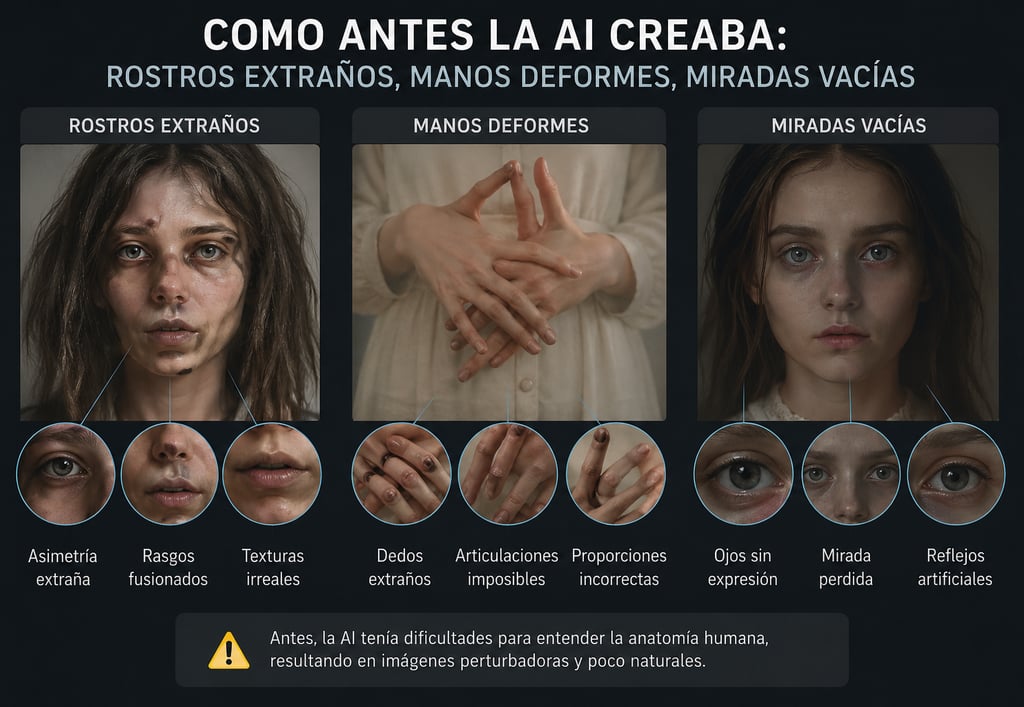
A few months ago, AI-generated images felt unsettling.
Strange faces, distorted hands, empty expressions.
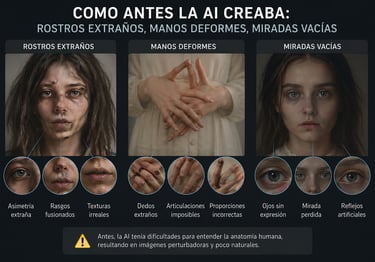
Today, the problem is different:
We no longer know what’s real…
but we also don’t know what’s relevant.
The errors are still there.
They’re just more subtle now.
And if you don’t have that pixel-perfect eye —that critical eye that catches what doesn’t feel right—
they can slip straight into a final piece.
Especially when everything needs to be done fast.
I’ve seen it:
An image can go through several people, and if the detail is small, no one notices.
Or worse, we normalize it.
“It's AI… just leave it.”
And at that point, almost without realizing it, we start to lose something essential:
We stop questioning…
and end up accepting as human something that isn’t.

And that’s when a key question came up for me as a designer:
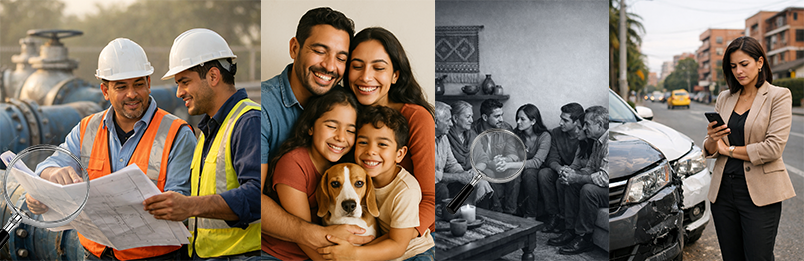
What if we started building our own visual stock?
What if, instead of relying on generic image banks, we began creating visual assets with intention?
What if we could bring that same value directly to our clients?
Around that time, I came across the work of Pablo Stanley, especially his course How to Create AI Images: On-Brand and Inclusive Photography, and initiatives like Lummi.
More than inspiration, it was confirmation:
This wasn’t an isolated idea.
While others were exploring how to build visual libraries with identity,
I was starting to walk that same path through my own practice —and with my own human perspective.
2. The opportunity: building your own stock with identity
In many projects —especially in sectors like legal, financial, or corporate— there’s a constant challenge:
How to represent the human side of businesses that have historically been perceived as cold or distant.
In Latin America, and particularly in Colombia, this becomes even more evident.
So I decided to run an experiment:
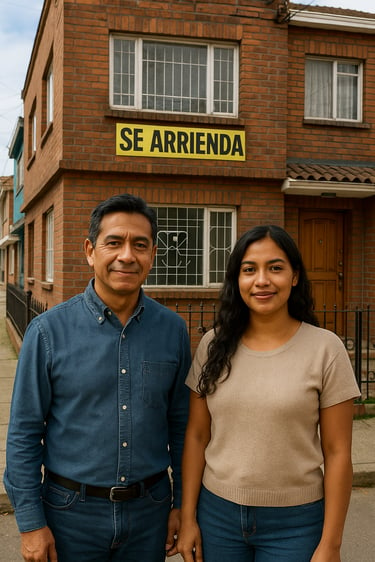
Create images designed for real contexts
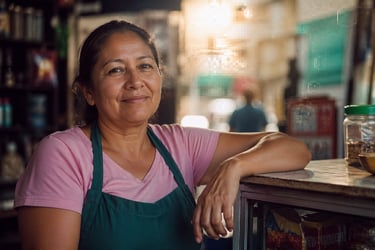
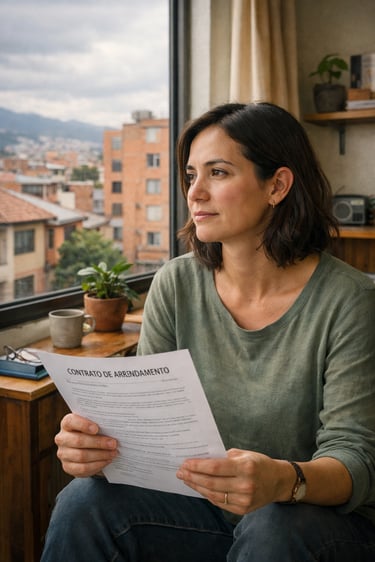
Represent people who feel close and relatable, not generic models
Build scenes that feel local (not artificially globalized)
It wasn’t about making “beautiful” images.
It was about making credible ones.
Because in the middle of all the noise —new tools every week, promises of automation, endless templates— there’s something that remains scarce:
Human-centered judgment.
And this is where something I can’t ignore started to appear as I worked with AI:
Copyright.
If I want to create something more human,
how do I ensure the AI isn’t replicating someone’s real face?
It’s an uncomfortable question…
but a necessary one.
I don’t want to stay only in the “magic” of creation.
I also study:
Bias in AI
Accessibility
And the real impact of what we’re building
Because yes, AI can make us feel faster, more capable… almost like superheroes.
But I don’t just talk about designing for people.
I talk about designing for humanity, without exceptions.
Because when you truly apply that, everything changes:
How we use technology
How we make decisions
And even what we’re willing to accept as “correct”
In a context where AI can generate anything, the challenge is no longer technical.
It’s ethical.
It’s human.
It’s conscious.





3. The real value isn’t the image — it’s prompting with intention
This is where the game changes.
Today, anyone can generate an image.
But not everyone knows how to direct it.
Design is no longer in the tool.
It’s in how we think about what we want to create.
Learning prompting is not about writing commands.
It’s about:
Understanding visual narrative
Defining context
Building intention
Designing from a human perspective
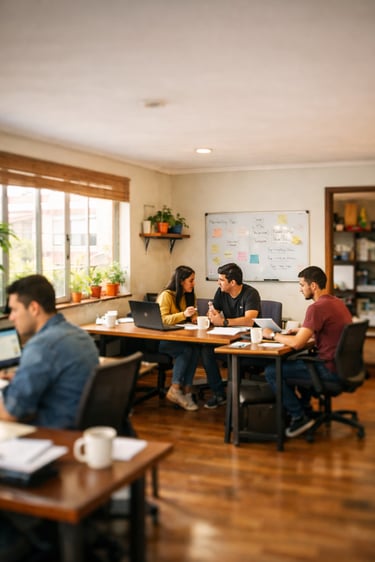
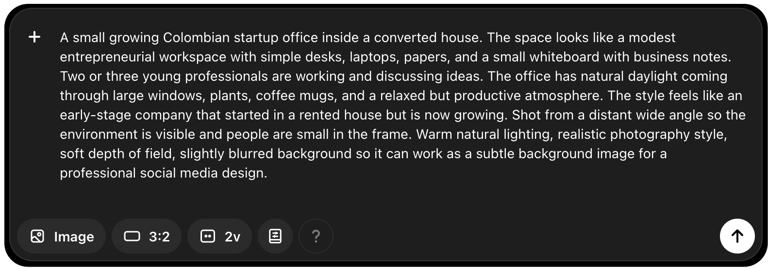
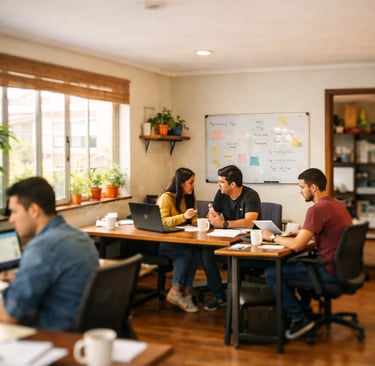
Here’s one of my prompts, along with some of the images you saw earlier.
And you might be wondering:
Why in English?
Many people say it’s best to write in your native language, because that’s where ideas flow more naturally.
And yes, that makes sense.
But in my case, there’s another reason:
Every exercise is also an opportunity to practice English.
Just like when we set our devices to another language to learn, this becomes part of the process.

Tip: Words are designed too
In one of my many prompting courses, I came across something that changed the way I write:
The concept of Embedding Projector.
You don’t need to understand it at a technical level.
What matters is this:
Words don’t exist in isolation — they live in relation to each other.
In AI models, each word has a “position” in a space,
and words that are closer together tend to have similar meanings.
4. My process (as a learning exercise)
I tried multiple tools, courses, and platforms.
A lot of noise. A lot of promises.
And I reached a practical conclusion:
You don’t need every tool — you need a clear workflow.
My current stack (by choice, not by trend):
Generative AI for images (and in some cases, video)
Continuous exploration in prompting


More important than the tool:
Knowing when it’s worth paying… and when you’re still learning.
There are two concepts I always apply:
ROI (Return on Investment) → Return on money
ROE (Return on Effort) → Return on effort
Because yes, in the race to “not fall behind,” many designers are losing something fundamental:
Awareness of the value of our work.
We pay for tools, subscriptions, trials… we put our cards in almost automatically.
And in other cases, we test platforms without thinking too much,
even uploading real data… without fully understanding the consequences of using sensitive information.
It’s interesting:
Either we spend without control
Or we experiment without limits
5. From stock to final piece: where design truly begins
Creating images or videos was just the first step.
What became truly interesting came next: how to connect everything into a coherent workflow.
Because it’s not about generating isolated images.
It’s about building a system that allows you to use them with intention.
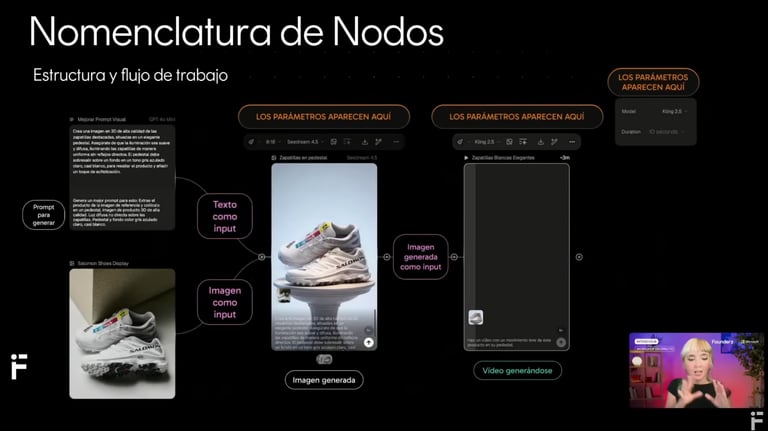
In my case, the process was structured like this:
AI image generation (exploration and visual direction)
Curation and organization into libraries
Integration with design tools
Building the final pieces
This is where I found something key.
By working within the ecosystem of Adobe, I was able to structure that workflow more effectively:
creating image collections
centralizing visual assets
connecting them directly with tools like Adobe Express
This allowed me to move from a “generated image”
to a reusable asset within a system.
And that’s where AI stops being an experiment… and starts becoming part of a design process.
And this is where the debate might come in.
Yes, I use Adobe tools.
Not because they are “the best,” but because they are already part of my workflow.
They allow me to do something very simple —but very valuable:
Organize collections by client, maintain libraries with colors, logos, and assets… and keep everything connected.
And I come back to my point:
I work with what I have available.
It’s my language.
It’s where I already understand how to build.
So why put more pressure on my brain just to learn another tool,
when I can still push this one to its full potential?
Creating images or videos was just the first step.
What became truly interesting came next: how to connect everything into a coherent workflow.
Because it’s not about generating isolated images.
It’s about building a system that allows you to use them with intention.
In my case, the process was structured like this:
AI image generation (exploration and visual direction)
Curation and organization into libraries
Integration with design tools
Building the final pieces
This is where I found something key.
By working within the ecosystem of Adobe, I was able to structure that workflow more effectively:
creating image collections
centralizing visual assets
connecting them directly with tools like Adobe Express
This allowed me to move from a “generated image”
to a reusable asset within a system.
And that’s where AI stops being an experiment… and starts becoming part of a design process.
And this is where the debate might come in.
Yes, I use Adobe tools.
Not because they are “the best,” but because they are already part of my workflow.
They allow me to do something very simple —but very valuable:
Organize collections by client, maintain libraries with colors, logos, and assets… and keep everything connected.
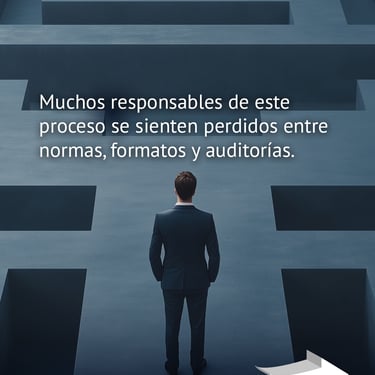
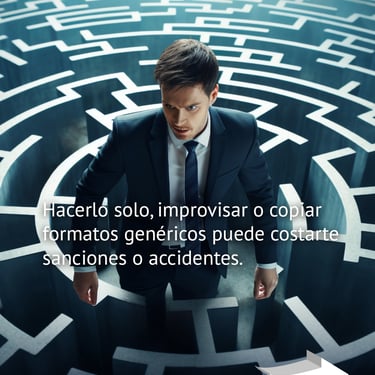
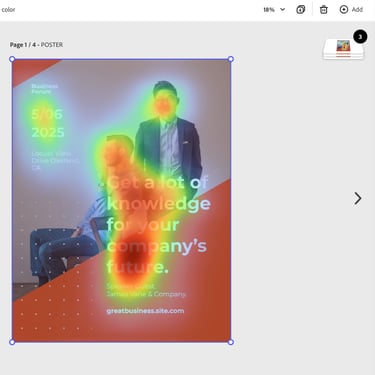
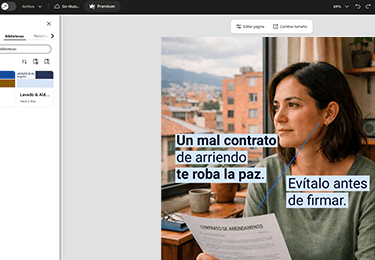
Since AI was integrated, everything started to connect:
libraries, assets, visual systems… all within a single workflow.
It offers many features —video editing, captions, voice tools—
and even though I’m not a social media designer or content creator, I find something here that I truly value:
A blank canvas to build.


I could use templates.
We all could.
But this is where something very personal comes in:
Seeing the same visual languages, the same structures, the same decisions over and over…
eventually becomes noise.
And for me, that breaks something important:
A brand’s identity, personality, and unique visual language.
That’s why I chose to stay with this workflow.
Not because it’s the most popular,
but because it allows me something I value more:
To intervene, adjust, and build until the piece feels like mine.
Not the AI’s.
Not a template’s.
Mine.
What happens when this scales?
Today, the landscape goes far beyond generating images or individual pieces.
Companies and large agencies are already working with AI agent orchestration, where multiple systems collaborate to create content, automate processes, and scale production massively.
Ecosystems like the ones driven by Microsoft are taking this to another level:
It’s no longer just about designing —
it’s about orchestrating entire systems of creation.
6. Copyright
I know this isn’t the most “exciting” topic.
Many will say:
“If big AI companies haven’t fully figured it out… why should we worry about it?”
For me, it’s the opposite.
If we’re creating, we should also be questioning.
Because this is where an uncomfortable question appears:
If I generate an image with AI… who does it really belong to?
Is it mine, because I created it?
The tool’s, because it generated it?
Or someone else’s, if the model was trained on real data?
In my case, I went straight to the source —I researched and asked.
And the answer isn’t as simple as we would like.
Today, in most AI platforms:
Authorship is attributed to the human directing the creation
But the output still depends on models trained on external data
And the legal debate is far from settled
In other words:
We are creating in a space that is still being defined.
And this is where it connects with everything else.
If I want to build with human intention,
I also need to ask:
Where does what I’m using come from?
Who might I be representing without realizing it?
And what responsibility do I have as a designer?
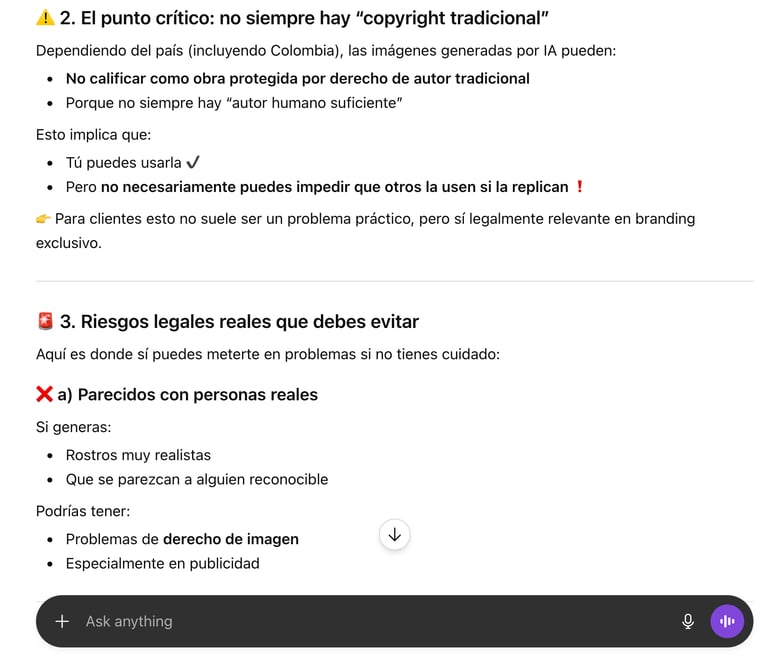
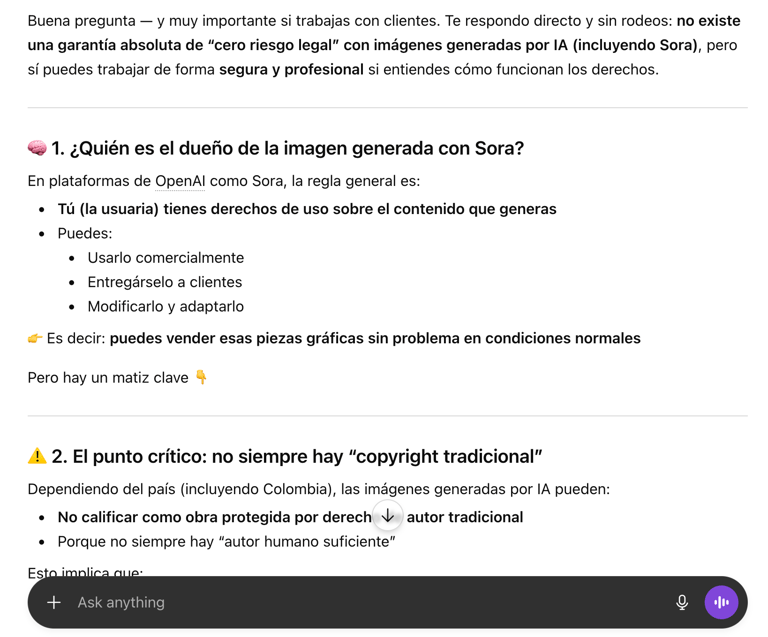
So I went straight to the source —as we’d say in Colombia, to the owner of the place.
I wanted to truly understand what’s happening behind these tools.
And if this topic interests you, I invite you to do the same: ask questions, dig deeper, and review each platform’s terms and conditions.
Because yes… it’s a dark space.
And often, not very clear.
And I say this from a cultural perspective as well.
We’re good at figuring things out, finding ways, making things work.
But in this context, without judgment, it can become a problem.
Because with these tools, the margin for error isn’t small… it’s exponential.
Today, more than ever, we can create anything.
Perfect images.
Ideal scenarios.
People who don’t even exist.
But that doesn’t mean everything we create… has meaning.
We don’t design for users.
We don’t design for metrics.
We design for humanity, without exceptions.
And that implies more than just knowing how to use tools.
It means questioning:
What we create
How we create it
And the impact we leave behind
This article comes from my most “designer” side.
From curiosity.
From the joy of creating.
But my work goes beyond this.
I work building systems, making decisions, and designing experiences that impact real products.
And that’s exactly why this matters to me.
Because it’s not just about what we can do with technology.
It’s about how we use it
What we choose to build
And the responsibility we take on
Happy Designer’s Day to those who continue creating with intention. ✨